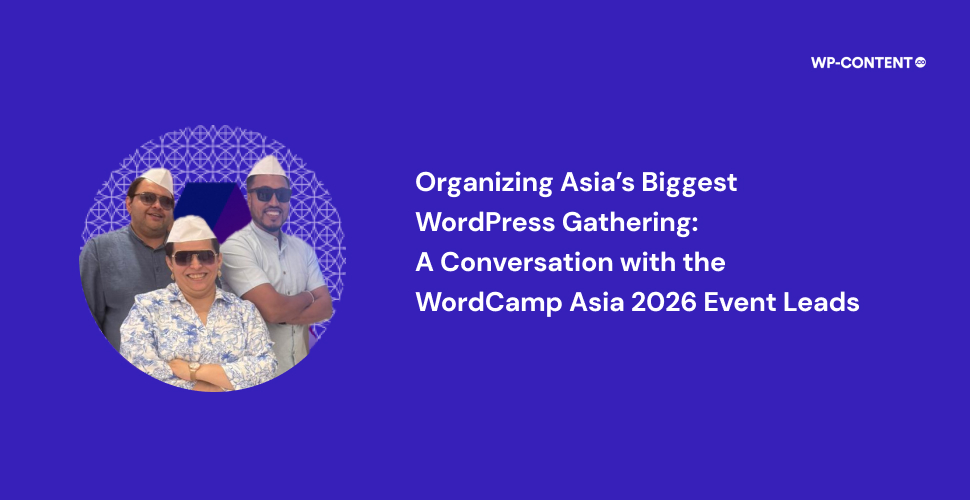


From bringing together thousands of WordPress enthusiasts to showcasing the best of the community, WordCamp Asia has become a flagship event for the global WordPress ecosystem.
With WordCamp Asia 2026 on the horizon, we spoke with the event leads Regan Khadgi, Adiya Kane, and Meher Bala to learn more about the planning process, the team behind the scenes, and their vision for the next chapter of this growing regional event.
1. What do you hope attendees will take away from this year’s conference?
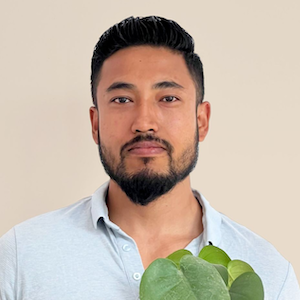
Regan Khadgi: I hope attendees leave with clarity about where WordPress is heading, meaningful connections across the region, and confidence that they belong in this ecosystem — whether as users, builders, or contributors.
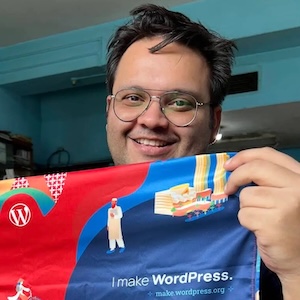
Aditya Kane: I hope the attendees at this year’s conference take away a lot of things from learning how AI is being used in WordPress to networking and learning about new things all around.
But most importantly, I hope that an attendee goes away with a great sense of curiosity around WordPress and a deep appreciation of open source!
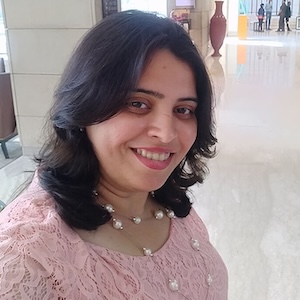
Meher Bala: WordPress powers more than 40% of the web. That statistic sounds impressive on paper, but the real engine behind it is the community. Thousands of people around the world who build, improve, document, support, and care about the platform every single day.
When people come to WordCamp Asia 2026, I really hope they leave with three things.
First, new skills – the web is evolving quickly. New tools, new workflows, new ideas. Through talks, workshops, and contributor sessions, people can discover better ways to build with WordPress, explore emerging technologies, and understand where the ecosystem is heading. Whether someone is a beginner or a seasoned developer, there is always something new to learn.
Second, stronger connections – one of the best parts of WordCamp is the conversations that happen outside the stage. In hallways, at contributor tables, during community meetups. You meet people from across the world who share the same curiosity and passion. Many times, those conversations turn into collaborations, partnerships, or friendships that last far beyond the event.
Third, the inspiration to contribute. WordPress exists because people choose to give back. Some contribute code. Others help with design, documentation, translations, community building, or mentoring new contributors. If someone leaves WordCamp Asia feeling excited to participate and strengthen the open web, that is a huge win.
At the end of the day, WordCamp Asia is not just a conference. It is a reminder that the future of the web is something we build together.
2. What lessons from previous WordCamps are shaping this year’s event?
Regan Khadgi: We’re refining, not reinventing. Clear communication, strong sponsor, speaker, volunteer onboarding, smoother logistics, and intentional programming are key focus areas. Experience from previous editions helps us elevate both content and attendee experience.
Aditya Kane: One thing we are planning on doing is to focus more on workshops. There is something magical about the practicality of interacting with and using software hands-on.
Meher Bala: One of the biggest lessons I’ve learned from organizing and attending previous WordCamp Asia is that the most memorable parts of the experience are seeing new people learn about WordPress and join the community. While great talks are important, the real value comes from conversations in hallways, meeting people, and collaborating during contributor activities. While organizing WordCamp Asia 2026, we’ve focused a lot on welcoming new folks to the community and creating spaces and moments that encourage meaningful connections within the community.
Many people attending their first WordCamp may not know where to start—so we try to design the experience in a way that helps them feel included, whether through orientation sessions, community activities, or simply ensuring there are friendly faces ready to guide them.
This year’s event is in Mumbai, and we’re putting extra thought into creating opportunities for students to learn how to use WordPress and connect with the larger community project beyond the conference.
My goal is that people leave feeling that this wasn’t just a conference they attended, but a community they truly experienced.
3. What will feel different about the 2026 edition?
Regan Khadgi: Mumbai brings a unique energy — larger scale, deeper community participation, and stronger grassroots representation. This edition will feel more community-powered, especially with India’s massive WordPress presence.
Aditya Kane: It will be unique, like each edition of WordCamp Asia has been. Our focus on AI tools and also focusing on having content that is relevant to a more younger or newer demographic around WordPress will be different this year.
The most unique thing will be on Contributor Day, when we will have an in-person live launch of WordPress 7.0.
Meher Bala: For someone who has attended WordCamp Asia in previous years, the 2026 edition will feel special in a few ways. Hosting it in Mumbai (my city) brings a different energy—this city has a vibrant tech and open-source community. I’m excited for attendees to experience that local spirit alongside the global WordPress community.
What also makes this year unique for me is the timing of the WordPress 7.0 release happening around Contributor Day. Having that milestone coincide with the event creates a special moment where contributors and community members can witness the project evolving in real time.
4. How will WordPress 7.0 release be marked during the event?
Regan Khadgi: A major WordPress release during WordCamp Asia is historic. We will be releasing it as a grand celebration in our Contributors Day.
Aditya Kane: Yes. We hope to celebrate the WordPress 7.0 launch at Contributor Day. We are still figuring out plans around exact launch timings, as there needs to be some prep work and testing to be done. We hope several people watch and follow the launch and then later get inspired to be part of other launches and keep contributing.
Meher Bala: As someone who has served as a release coordinator for previous WordPress releases, seeing WordPress 7.0 launch on Contributor Day at WordCamp Asia 2026 feels especially meaningful. It’s a true celebration of collaboration and a unique opportunity to show attendees—particularly those who have never experienced a release up close—how the process comes together in real time. It also marks the first time a WordPress release is happening during a flagship WordCamp, which makes the moment even more special for the community.
From an organizer’s perspective, we definitely want to acknowledge and celebrate the milestone with the community present in the room. Thousands of contributors, developers, and enthusiasts will be gathered together in Mumbai, which feels like the perfect place to mark such a significant release.
The community being together when WordPress 7.0 goes live is already something special, and we definitely want to make sure the moment feels worthy of the occasion.
Read more about this in our article.
5. What’s one behind-the-scenes process that takes months to get right?
Regan Khadgi: Volunteer management. Coordinating onboarding, shifts, communication, and team alignment at this scale requires months of planning and collaboration.
Aditya Kane: That is an easy answer. Programming is something that takes months to get right. There is just so much of a feedback loop, so many possibilities that getting it all together takes a lot of time.
Meher Bala: From my experience organizing WordCamp Asia, one thing that often surprises people is that a flagship event is never the work of just one person. It truly takes a village.
As organizers, we spend months, sometimes close to a year, working together as volunteers to make sure everything comes together smoothly and on time. At the same time, we are constantly thinking about how to create an experience that engages both long-time community members and people attending their very first WordCamp.
One area that takes far more effort than people usually expect is shaping the program. On the surface, it may look like a simple list of talks. Behind the scenes, though, there are months of thoughtful work. We review hundreds of submissions, try to balance topics across different skill levels, coordinate with speakers from around the world, and ensure the sessions flow well across multiple tracks.
For me personally, a big part of organizing WordCamp is finding the right balance. It is about honouring the experience and contributions of long-time WordPress contributors, while also creating space for the next generation to discover the community and feel genuinely welcomed into it.
Throughout the process, we keep asking ourselves a few key questions. Will a first-time attendee find something valuable here? Will developers, designers, and business owners all feel represented? Getting that balance right takes many conversations, revisions, and feedback loops.
By the time the schedule is finally announced, people see the finished result. What they do not see are the months of collaboration behind it. Volunteers from across the community are working together, simply because they care about creating a meaningful experience for everyone in the WordPress ecosystem.
6. How do you manage coordination across multiple teams?
Regan Khadgi: Clear roles, regular syncs, written documentation, and strong trust between team leads. When people feel ownership, coordination becomes collaboration.
Aditya Kane: I think the reason people organize WordCamps, any WordCamp, let alone a flagship event like WordCamp Asia – they want to actually embrace the idea of working and collaborating with different people with different skills and experiences.
Sometimes it can be a bit of chaos, but most organizers embrace the chaos and trust each other to make sure collaboration and coordination happen skillfully.
Meher Bala: In my experience organizing WordCamp Asia 2026, coordination really comes down to trust and communication. With so many teams and people from different parts of Asia working on different parts of the event, the key is staying connected, supporting each other, communicating on time and remembering that we’re all working toward the same goal—creating a great experience for the WordPress community.
7. What defines a successful Contributor Day?
Regan Khadgi: Momentum. First-time contributors making their first contribution, experienced contributors mentoring others, and tangible progress toward WordPress contribution. And besides just contributors contributing, we are organizing various workshops where we will be teaching different aspects of contribution in WordPress for very first timers.
Aditya Kane: People enjoying and having fun making their first translation, first patch, first support ticket. Having several such instances is what, for me, marks a good Contributor Day.
Meher Bala: For me, a successful Contributor Day at WordCamp Asia 2026 is when people walk in curious and walk out feeling confident that they can contribute to WordPress. I love seeing first-time contributors sit down at a table, learn how the project works, and realize that their skills—whether in code, design, documentation, or community—can truly make an impact.
If someone leaves Contributor Day thinking, “I didn’t know I could be part of this, but now I want to keep contributing,” then for me, that’s a real win.
8. Why move to an open call for the Speed Build Challenge?
Regan Khadgi: Inclusivity and transparency. WordPress is open by nature — our programs should reflect that. An open call brings broader participation and open selection.
Aditya Kane: Open call means we open up the possibility to vet and choose people from a larger pool. So I hope we find some new folks who try their hands at the Speed Build Challenge.
Meher Bala: From my perspective as an organizer of WordCamp Asia, opening up the Speed Build Challenge felt like a natural step for the community. In the past, it was invite-only, but we realised there are so many talented developers in the WordPress ecosystem who might never get the chance to showcase their skills if the door isn’t open to them.
Moving to an open call was really about giving more people that opportunity—whether they’re well-known in the community or just starting to make their mark. Personally, I’m excited to see fresh perspectives, different building styles, and maybe even some unexpected talent emerge.
The impact I hope for is simple: that more people feel encouraged to step forward, participate, and realise that WordCamp stages are spaces where anyone in the community can share their creativity and skills.
9. What impact do you hope scholarship recipients create afterward?
Regan Khadgi: We see scholarships as leadership investment. We hope recipients return home to start meetups, mentor others, and strengthen their local WordPress communities.
Aditya Kane: Every scholarship is usually given to people who have already been active locally. In a way, we are celebrating them.
So attending the event is a great way for them to interact with the larger global community and bring a lot of interesting ideas and things they observe back to their local communities, where they are active.
Meher Bala: For me, the real success of the scholarship program at WordCamp Asia 2026 is what happens after the event. I hope recipients return to their local communities feeling inspired and confident to share what they learned—whether that’s organizing meetups, encouraging others to contribute, or simply helping more people discover WordPress.
If they go back and spark even a small ripple in their local community, that impact can grow far beyond the event itself.
10. Will YouthCamp and interactive workshops return?
Regan Khadgi: Yes — We are conducting youthcamp and various interactive workshops in all 3 days of the event, including the Contributors Day as well.
Youth-focused programming remains our priority, and we want WordCamp Asia to be participatory, inclusive, and future-focused.
Aditya Kane: Yes, we do have YouthCamp and several workshop sessions this year. We have a workshop track on the side, knowing that a lot of attendees would find them very useful and that way they can interact with WordPress right off the bat.
Meher Bala: Yes, we are having YouthCamp again this year at WordCamp Asia 2026, which is focused on hands-on workshops where young participants build, explore, and create using WordPress alongside other young makers.
YouthCamp, in particular, is something I’m personally excited about—it’s a great way to introduce the next generation to WordPress and the open-source community. Alongside that, interactive workshops give attendees the chance to go beyond listening and actually build, experiment, and learn together.
For me, the most meaningful moments are the ones where people are learning by doing and collaborating in real time. Those are the moments when you really see the WordPress community come alive.
The team is hard at work to make WordCamp Asia 2026 a memorable event for the global WordPress community. If you’d like to be part of it, tickets are now available, so don’t miss the chance to join fellow WordPress enthusiasts from around the world.